Academics
Liberal Arts & The Trivium
The ultimate aim of education at Zaytuna College is the inculcation of the love of beauty, truth, and goodness in a human being. Muslims call the highest truth īmān, or a firm conviction of God’s existence and providence; we call goodness islām, or submission and resignation to God’s will and action in accordance with it, on earth as it is in heaven; and we term beauty iĥsān, which literally can mean “to make beautiful,” “to reflect beauty,” and “to perceive beauty.”
Each of these is reflected in the liberal arts of freedom taught at Zaytuna: grammar is man’s greatest good; logic makes him capable of recognizing truth and seeing falsehood in its absence; and rhetoric enables him to transmit beauty in all he does. With mastery of these arts, we can embark on the discovery of the absolute by light of reason only, free of the constraints of our senses, resulting in the perception (ma¢rifah) of reality, where at last we find peace and understanding.
The trivium is the foundation of the College’s pedagogical mission. Its constituent disciplines—grammar, logic, and rhetoric, each of which is taught in both the Islamic and Euro-American traditions—are studied and repeatedly practiced by students throughout their four years of study, to achieve excellence in reading, writing, speaking, and reasoning.
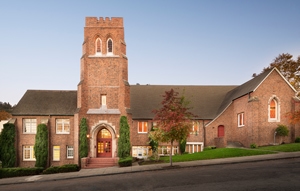
A Campus Tour of Zaytuna College
Bachelor’s Degree in Liberal Arts and Islamic Studies
Zaytuna’s bachelor of arts program is founded on an integral liberal arts curriculum, consisting of courses from both the Islamic and Euro-American traditions of higher learning.
Master’s Degree in Islamic Texts
Zaytuna’s master of arts degree in Islamic texts is intended to provide students with higher-level access to the Islamic tradition through a guided course of study in Islam’s primary sources.
What Our Students Say
I can’t thank your college enough for bringing some of the beautiful teachings of Islam to our society here in UK. Keep up the good work and please don’t forget to share as much as possible on YouTube or other avenues.
Asrar, United Kingdom
Truly what Zaytuna is teaching is absolutely critical. We need Zaytuna, we need strong, intellectual, balanced muslims that unite the inner and outer sciences and work to perfect their character. May Allah provide for Zaytuna!
Mehran, Canada
I wholeheartedly believe in Zaytuna and in the future of its Muslim intellectuals. May Allah bless Zaytuna with His light and make its students the leaders of tomorrow that we so desperately need.
Subuk, California